
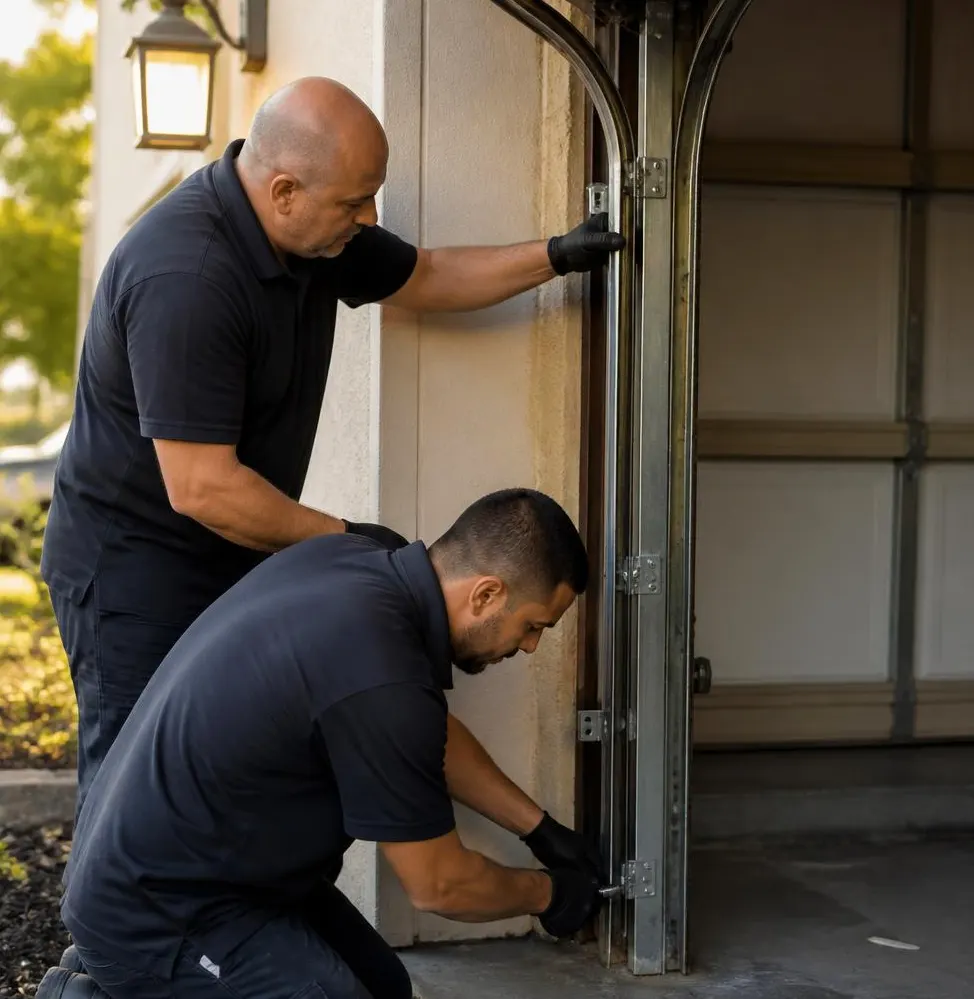
What a Technician Sees After a Windy Week
After a few days of gusty weather rolls through the Lowcountry, the service calls start sounding the same. A homeowner noticed the garage door "breathing" in and out during a storm, or heard a bang and found a bent track the next morning. Sometimes it's a door that won't close all the way because a roller popped out of its track under wind pressure. Other times the opener motor burned out trying to force a door that was already straining against the wind. None of these show up out of nowhere. They're almost always the result of a door that was already a little loose, a little worn, or never built to handle sustained wind pressure in the first place.
Why the Garage Door Is the Weakest Point in the Wall
Every other opening in a house - windows, doors, even skylights - is small and braced on all four sides. A garage door is the largest moving opening in most homes, often 16 feet wide, and it's held in place by rollers riding in thin metal tracks, plus a handful of hinges and a spring system doing the heavy lifting. When wind pushes against the rest of the house, that pressure has to go somewhere. If the garage door fails - buckles inward or gets sucked outward - the wind suddenly has a straight path into the house. That pressure change can lift roof panels and blow out windows from the inside, which is why structural engineers consistently point to garage doors as the first failure point in high-wind events, not the roof or the walls.
This matters more here than in a lot of places. Beaufort sees hurricane remnants pushing through even after storms weaken over land, and that means sustained wind and gusts without the dramatic storm surge warnings that get all the attention. A door that's never been tested against a direct hurricane can still take real damage from these weaker, more frequent wind events.
Signs Your Door Isn't Ready
- Visible daylight around the edges of the door when it's closed - a sign the seal and alignment have shifted.
- Rattling or flexing panels when a car passes or wind gusts hit - thin, older steel or aluminum panels flex more than they should.
- Rollers worn or cracked, especially nylon rollers that have dried out from summer heat and humidity swings.
- Tracks that are loose, bent, or pulling away from the frame - common in garages where moisture and pine debris have corroded the mounting hardware over time.
- Weatherstripping that's cracked or missing along the bottom and sides, letting wind-driven rain push underneath.
- A single spring doing the work of two, or a spring that looks stretched, rusted, or mismatched in coil size.
Reinforcement Options and the Trade-Offs
There are a few ways to actually strengthen a door against wind, and they come with different costs and limitations.
Horizontal Bracing Kits
Retrofit kits bolt horizontal struts across the back of each panel, which stiffens the door against bowing. They're the most affordable option (nationally, these tend to run from under a hundred dollars for materials up to a few hundred installed, depending on door size) but they only help as much as the track and hardware they're attached to. A bracing kit on a door with worn rollers and a sagging track is a partial fix at best.
Impact-Rated or Wind-Rated Doors
These are built with reinforced panels, heavier gauge steel, and track systems engineered to handle specific wind-load ratings. They cost more upfront than a standard door but are the most reliable option if a garage faces open ground or gets consistent wind exposure. The trade-off is cost and sometimes longer lead times, since not every wind-rated door is kept in stock.
Track and Hardware Upgrades
Sometimes the cheapest real fix isn't a kit or a new door - it's replacing worn rollers, tightening or replacing track brackets, and making sure hinges aren't stripped. A door that's properly aligned and running on solid hardware handles wind pressure far better than the same door with a bracing kit bolted onto loose tracks.
Seasonal Prep That Actually Matters Right Now
With fall bringing the tail end of hurricane remnants and the heavy rain that comes with them, a few practical steps go a long way:
- Clear pine straw and debris from the track and bottom seal - it traps moisture and accelerates rust on hardware.
- Check that the bottom weatherstripping is intact so wind-driven rain doesn't pool under the door.
- Lubricate rollers and hinges with a silicone-based lubricant, not household oil, which washes out in heavy rain.
- Test the auto-reverse safety feature and make sure the opener isn't straining - a motor working too hard in a storm is more likely to fail at the worst time.
- If a storm is forecast with sustained high wind, avoid parking a vehicle to brace the door from inside unless the manufacturer specifically allows it - it can bend tracks or damage the vehicle if the door flexes hard.
When to Call Beaufort Garage Door
If a door is rattling, showing daylight around the edges, or has a track that looks bent or loose, that's worth a look before the next round of wind comes through, not after. Beaufort Garage Door handles both Garage Door Maintenance - tightening hardware, replacing worn rollers, resealing weatherstripping - and full Garage Door Repair for doors that have already taken damage, including bent tracks and spring issues that show up after a storm. For doors that fail outright during severe weather, the team also offers Emergency Garage Door Service so a damaged door doesn't sit open and exposed overnight.
If storm season has you wondering whether your garage door would hold up, call Beaufort Garage Door in Beaufort, SC, and get it checked before the next system rolls through the Lowcountry.