
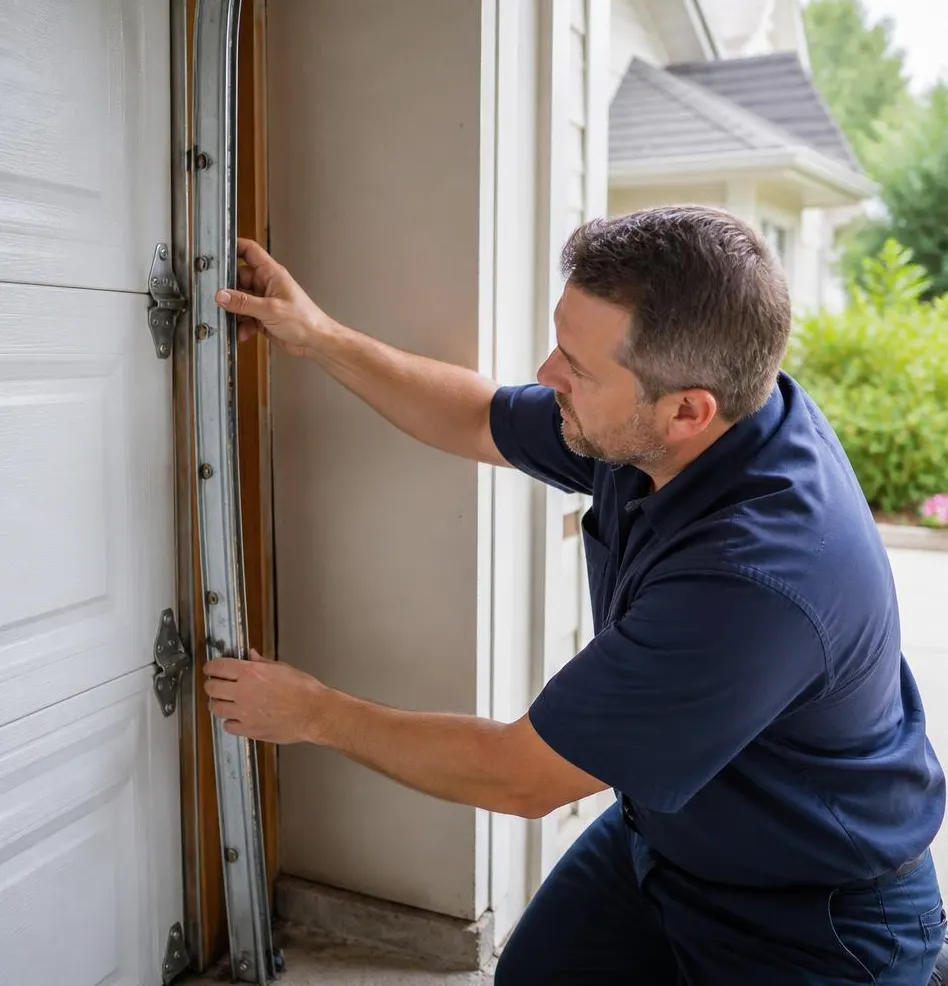
What We See on the Average Service Call
A technician gets called out for a sticking door or a dead opener, and while he's got the panels open, the homeowner mentions they're mid-argument with their spouse about whether to replace the door with an insulated model. One of them is convinced it'll cut the AC bill in half. The other thinks it's a sales gimmick dressed up with an R-value sticker. Most of the time, they're both a little right, and the answer depends on something neither of them has thought about: what's on the other side of that door.
What R-Value Actually Measures
R-value is a measure of how well a material resists heat transfer. Higher number, better insulator. On a garage door, that number tells you how much the door itself slows down heat moving from outside to inside, or vice versa. It says nothing about air leaks around the edges, the condition of your weatherstripping, or whether your garage is attached to the house. A door with a high R-value and gaps around the bottom seal is still going to let conditioned air out and humid air in.
Also worth knowing: the R-value you see advertised is often tested under ideal lab conditions, not with hardware, windows, or your specific installation. Treat it as a rough guide for comparing doors, not a guarantee of real-world performance.
Who Actually Benefits
Insulation earns its keep in a few specific situations:
- Attached garages, especially if the garage shares a wall with a bedroom, laundry room, or living space. An uninsulated door lets summer heat radiate straight through that shared wall.
- Garages with ductwork or an HVAC unit running through them. If your air handler lives in the garage, that space needs to stay closer to ambient indoor temperature, or your system works harder than it should.
- Garages used as workshops, gyms, or hobby spaces, where someone is actually spending time in there during July's heat or a rare January cold snap.
- West- or south-facing doors that take a full afternoon of direct sun. Insulation and a reflective-backed panel both help keep that door from turning into a radiator.
- Anyone bothered by road noise or door rattle. Insulated doors are almost always better built structurally, with foam core sandwiched between steel skins, which cuts down on vibration and bang when the door opens and closes.
A Humidity Note Specific to This Area
There's a secondary benefit that doesn't show up on the R-value sticker: condensation control. In our hot, humid summers, a cold interior meeting humid outside air on an uninsulated steel door can sweat, which over time contributes to rust at the bottom panel and hardware. An insulated door's foam core and tighter seals reduce that temperature swing on the door's surface, so you see less condensation dripping down onto the slab.
Who's Paying for Nothing
If your garage is detached, unconditioned, and used purely for storage or parking, a high R-value door is mostly wasted money. Heat and cold move through an uninsulated structure's walls and roof just as easily as through the door, so upgrading only the door doesn't change the temperature inside much. In that case, you're paying a premium for insulation value you'll never collect. A standard steel door, properly sealed, does the job for less.
Same goes for anyone expecting an insulated door alone to meaningfully drop their whole-house energy bill. The door is one surface among many. If your attic insulation is thin or your house has single-pane windows, the garage door is not where your energy dollars are leaking out fastest.
The Trade-offs
Insulated doors typically run higher upfront, often several hundred dollars more than a comparable non-insulated steel door, though exact pricing varies by size, style, and R-value tier. They're heavier, which means your opener and springs need to be sized correctly for the added weight, or you'll burn out a motor or snap a spring well ahead of schedule. They're also a bit more involved to repair if a panel gets damaged, since replacement panels need to match the insulation type.
Settling the Argument
If the garage is attached, houses mechanical equipment, or gets used as living space, insulation is worth the extra cost. If it's a detached, unconditioned storage building, save the money and put it toward better weatherstripping and a solid bottom seal instead, which does more for keeping out humidity, pollen, and wind-driven rain than the door panel itself.
When to Call Beaufort Garage Door
If you're weighing a new door and want a straight answer based on your actual garage setup, not just a brochure, Beaufort Garage Door can walk your space, check what's sharing a wall with that garage, and recommend an insulation level that fits your situation instead of overselling you. We handle both full Garage Door Installation and Garage Door Maintenance, including resetting opener force settings and reinforcing seals on older doors that are losing their grip against our humidity and pollen season.
Give Beaufort Garage Door a call to get a straight assessment for your home in Beaufort, SC, and the surrounding Lowcountry.